
The Connection, Inc Blog
The Connection, Inc has been serving the New Jersey area since 1992, providing IT Support such as technical helpdesk support, computer support and consulting to small and medium-sized businesses.


Businesses rely on hardware, like workstations, servers, mobile devices, and more, to keep operations moving forward. However, managing these knowledge-intensive machines can demand time and resources that are finite for SMBs. If you’re challenged by the management and deployment of hardware, let us guide you through the process of doing so.
0 Comments

When tablets first hit the market, the general prediction was that they would eventually replace PCs as the de facto device for computing, However, based on their steadily declining sales, this prediction seems to be a little off base--but, why? A closer examination provides some insight into why tablet sales have dipped.
If It Ain’t Broke, Don’t Buy a New One
If there’s one thing that is brought everywhere in today’s world, it’s one’s cellular device. Many also habitually carry their laptops with them, if not to the same extent as their phones. These devices can be found in the office, the home, the local cafe, at the airport, at the bus station… really, anywhere that people can be found. However, when was the last time you saw someone walking around with a tablet?
For whatever reason, people tend not to bring their tablet out, which leads to less wear and tear on the device. A device that is gently cradled in one’s lap with one’s feet up will sustain much less damage than one that is brought literally everywhere. It is this difference in usage that gives the tablet its relative longevity, and that prevents tablets from being bought and replaced out of necessity.
Nobody Pressures You to Upgrade
The free upgrades with a contract renewal and the new plans launched by Samsung and Apple, have cemented in the idea of replacing a phone on a regular basis. This is an idea that is not associated with tablets. In addition to the lack of wear covered above, there just isn’t the motivation to upgrade, largely because there aren’t many groundbreaking changes made to them. Looking at the situation frugally, why would someone spend money to replace something that still serves them perfectly well.
Awkward Dimensions
Comparing the sizes of tablets to those of smartphones and laptops, it becomes clearer why someone would more likely opt for one of the alternatives before selecting a tablet. Smartphone displays have become large enough to effectively take the place of a tablet, and convertible touchscreen laptops are essentially a more powerful tablet with more utility. This leaves the tablet in the middle of the road, falling short of user’s needs either way.
Reasons like these have led to tablets falling in popularity when compared to smartphones and laptops. However, there are still plenty of situations where they can prove their usefulness in a business environment; depending on the needs of that business.
To discuss your business’ equipment needs, call The Connection at (732) 291-5938.

Cloud solutions are extremely popular among modern businesses, whether they rely on public cloud resources or maintain their own in-house private cloud. Some businesses, however, elect to take the middle ground and use a “hybrid” cloud solution. Let’s take a few moments to determine if your business could benefit from this approach.
First, let’s examine what makes a cloud solution a “hybrid” one.
What is a Hybrid Cloud Solution?
As Peter Mell and Timothy Grance defined in Special Publication 800-145 from the National Institute of Standards and Technology (NIST), the hybrid cloud deployment model is defined with the following excerpt:
“The cloud infrastructure is a composition of two or more distinct cloud infrastructures (private, community, or public) that remain unique entities, but are bound together by standardized or proprietary technology that enables data and application portability (e.g., cloud bursting for load balancing between clouds).”
Or in other words, two different cloud models that function separately, but are both used for regular business operations. Some businesses elect to run their operations and applications on a private cloud solution, but use public cloud platforms for their backup and disaster recovery needs.
Benefits and Challenges of a Hybrid Cloud Approach
There are quite a few benefits that a hybrid cloud approach has to offer, including:
- Business Continuity and Disaster Recovery: You have the option to focus the hybrid cloud exclusively on your continuity strategy. With a backup in both a public cloud and private cloud, your chances of not having access to your data when you need it are effectively eliminated.
- Better Control-to-Need Ratio: Combining private and public cloud solutions together allows you to ensure you have the control over some elements of your business, while the public cloud allows you to better scale to meet your needs.
- Cost Benefits: There is no denying that some projects are too big to efficiently run on a private cloud. A hybrid cloud approach allows you to both keep your data secure while accessing the processing power a public cloud platform can provide.
However, the hybrid cloud does have some inherent challenges that could prohibit you from benefiting from its use.
- Lack of Visibility: In a hybrid cloud system, it can be difficult to keep track of where your data is being stored, and whether you are investing more than you need in one of its parts. This can have detrimental effects on your budget.
- Complicated Security: Even though your cloud vendors are putting forth their best efforts, the security of your data is your responsibility, and the marriage between public and private clouds introduces additional risks.
- Bottleneck Concerns: When data moves between public and private clouds, there could easily be a bottleneck somewhere in your network, creating severely negative impacts.
Still not sure if the hybrid cloud is right for you? Reach out to The Connection and find out! Give our experts a call at (732) 291-5938.
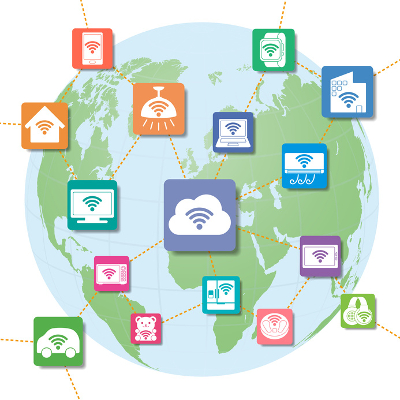 The introduction of new and exciting technologies keeps changing the ways people interact. Innovations such as email, instant messaging, and the development of mobile devices are now turning out to be just fundamental steps to a more connected planet. The Internet of Things is set to turn human civilization on its head. What does this shift mean for the immediate future?
News & Updates
The Connection, Inc. Celebrates 32 Years as a Trusted Technology Provider! Since our founding in 1992, technology and the way we operate and do business has changed a lot. Companies that have adapted and aligned themselves with ...
Understanding IT
Get the Knowledge You Need to Make IT Decisions
Technology is constantly evolving, and keeping up can feel overwhelming. Whether you want to understand cybersecurity threats, explore automation, or learn how regulations like PCI DSS impact your business, we’ve made it easy to access clear, straightforward insights on key IT topics.
Contact Us
Learn more about what The Connection can do for your business.
The Connection
51 Village CT
Hazlet, New Jersey 07730