
The Connection, Inc Blog
The Connection, Inc has been serving the New Jersey area since 1992, providing IT Support such as technical helpdesk support, computer support and consulting to small and medium-sized businesses.


As a business owner, you try to keep a pretty good idea of your overhead. Payments like rent, payroll, and amount of sales. There is a hidden utility that can quietly erode your productivity and customer satisfaction if ignored: Bandwidth.
Nowadays, bandwidth isn't just about how fast your website loads; it’s about how your business runs. From cloud-based POS systems to AI-driven customer service tools, your business lives and breathes on your connection.
0 Comments

Network hubs, network switches, network routers… What does it all even mean? All of these devices and terms can be confusing, and to some, they might even be interchangeable. However, the fact remains that they all serve different purposes, and some might not be the right solution for your business’ needs. Today, we want to break down the differences and when you might consider one over the other for your infrastructure.

Any business that depends on its IT—in other words, most businesses—needs to consider the cybersecurity that is in place to protect it. Today, many businesses have started focusing their cybersecurity efforts on protecting their network from the edges, an approach that is fittingly known as edge security. Let’s take a moment to talk about the benefits that edge security can offer you.

What do you do if you have forgotten your wireless router’s password? You could restore the router back to its default settings, of course, but what if you have, like a dummy, never changed the router’s password in the first place? This Internet password repository could be your saving grace.

Sometimes you might encounter situations where your network is limited in the amount of data it can process at any given time. The unfortunate truth is that it can be difficult to identify exactly what the problem is that is causing the slowdown, but one of the most common issues—the network bottleneck—is a pretty safe bet. But what exactly is a bottleneck, and what can be done to solve it?

2020 was a contentious—and for the wireless industry, momentous—year. Marking the official start of 5G networks, 2020’s events amongst mobile providers helped to reinvigorate an industry, while making some considerable shifts in the balance. Let’s consider some of these changes, and how the industry will continue to change for some time moving forward as 5G continues to grow.

Your business wireless connection is an increasingly important consideration, which means it needs to be installed and supported thoughtfully. Today, we will tell you a little bit about Wi-Fi and how to get the best performance out of your business’ wireless network.

It is important that you have a handle on the technology that your business utilizes, which will require you to maintain comprehensive documentation regarding it and its support. Here, we’ll go through what a managed service provider includes in this documentation, as well as how it is used.

Not all companies are prepared to deal with the costs associated with downtime. Any situation in which your organization cannot access important information or can’t operate with efficiency is something which needs to be prepared for; otherwise, you risk more than you know. We want to help protect your business when it needs it most.

It sure does seem that the term “network” is tossed around an awful lot. Network security, network maintenance, social networking, network switch… but what is a network, really? That is precisely what we shall dive into here.

A server is a necessary component of any business’ IT infrastructure, as its job is to make sure that information and policies are distributed the way they need to be across a network. Once, servers had to be on-site in order to work, there is now the option to have a cloud-hosted virtualized server. Which of these is right for your needs? Let’s do a quick comparison to find out.

Businesses require a lot of their Internet connections, especially if they’re using technologies like VoIP, screen-sharing, and/or webinar platforms. If you’re looking to incorporate these features, you need to be sure you have enough bandwidth to support them. We’re looking at a few reasons that your bandwidth matters, and how to tell if you have enough for your needs.
Before we go any further, it is important that you have an idea of how bandwidth functions.
Bandwidth Does Not Equal Speed
This is a common enough misconception that can be cleared up with a relatively simple analogy.
Picture a fast food restaurant, with a school bus filled with hungry student athletes looking for a post-game meal. As this team is very coordinated, they all want the same things, allowing the crew member behind the register to take all of their orders at a consistent rate. While it may take longer, all of the team members will have their order taken.
Now, imagine that the fast food franchise has a second person at the registers, equally proficient as the first employee. While the speed at which orders can be taken hasn’t technically increased, more orders can be taken at once, so the student athletes will make it through the line faster.
Bandwidth works in effectively the same way as the registers in this scenario. It isn’t that greater bandwidth moves data any faster, it’s that greater bandwidths can move more data at once.
This means that you can also invest in too much bandwidth. Let’s return to our fast food franchise for a moment. If you have someone ready and waiting on each of three registers, but only one customer, you are over-investing in your franchise’s “bandwidth.”
In other words, you’d be spending more money than you needed to, which is a pretty blatant (and shockingly common) problem for businesses.
The Influence of Bandwidth
The amount of bandwidth that your business has access to can have a considerable impact on your operations, by effectively limiting the amount of tasks that can be performed simultaneously - at least, without issue.
Different common business tasks will use different amounts of bandwidth, and most of them use a minimal amount of bandwidth. Then, there are the heavy hitters - Voice over Internet Protocol usage, webinars, and backup processes - that will use considerably more.
Fortunately, you can take steps to minimize the impact that insufficient bandwidth can have on your business’ operations. For example, you could throttle some of your less-important tasks, thereby saving more bandwidth for more critical ones, or simply scheduling as many of the processes that require a lot of bandwidth to take place after hours. Uploading a backup is a good example of this, as it requires a lot of bandwidth, so performing it after hours means that you won’t be interrupting other tasks.
Of course, one of the most helpful things to do that helps you optimize your available bandwidth is to find out how much bandwidth you actually have available.
Evaluating Your Network
When it comes to evaluating your bandwidth needs, there are a few different routes that you can take. There are speed tests available online that can give you an estimate of your bandwidth by comparing it to your approximate network traffic. One resource worth using is Speedtest.net.
However, if you are considering implementing VoIP or the other processes we mentioned above, there are other considerations you should look into, including:
- Mean Opinion Score (MOS)
The MOS was once entirely generated via feedback and opinions from human users. Specifically to VoIP, it is now generated based on an algorithmic analysis of three different metrics (those metrics being listening quality, conversational quality, and transmission quality) to give a score between 0-and-5 (or incoherent-to-excellent). I know I don’t need to tell you that you want your business to have high-quality calls. - Quality of Service (QoS)
Much like the MOS, the QoS of your VoIP solution is an important consideration in how successful you can consider your implementation of VoIP to be. Bandwidth plays a considerable role in defining the QoS. - Jitter
This is the term used to identify delays in data packet delivery to a network, recognizable by sounds that are choppy or lag. You should be aiming for minimal jitter, which translates to consistent packet delivery. - Latency (Ping Rate)
This is the term to describe the milliseconds-long delay that results from information moving from point-to-point. Ideally, this number is small and consistent, but this isn’t always the case. If a ping takes an abnormally long time to reach somewhere on the Internet and come back to your network, you have a MS spike, and potentially, a problem. - Codec
Whatever kind of broadcasting you may be engaged in (including VoIP), some data compression can be helpful, but swiftly becomes an issue if the audio quality is no longer sufficient. For instance, if you were using VoIP, you could compress the call to limit the bandwidth used, but this means the quality would suffer, and make the call harder to understand. Of course, a little compression may not be an issue, so to keep it to a minimum, make sure you have sufficient bandwidth to accommodate peak usage times.
We Can Help with a Network Evaluation!
The Connection has the skill to not only identify potential bandwidth issues, we can help you to resolve them as well! To learn more about what we can do to help your business function efficiently, give our team a call at (732) 291-5938!

Most businesses nowadays require a server in order to operate properly, but these critical pieces of infrastructure aren’t immune to issues. Here, we’ll go over a few common reasons that you may experience a server crash.
Age
Frankly, the server might just be getting old. Server hardware tends to have a lifespan of somewhere between four-and-six, some companies replace it sooner, and some try to stretch it out for as long as they can. When the end of this time approaches, the best way to avoid expensive issues is to replace it, as trying to push much further could wind up costing your business more in the form of downtime and disruption.
Equipment Failure
On top of your server, you have the other components in your infrastructure that, if they are having an issue themselves, can share that issue with the server and cause difficulties. Oftentimes, simply rebooting these components is enough to resolve your server’s problem… but if the issue persists, try calling The Connection for assistance.
Environmental Issues
Despite their size, servers are extremely vulnerable to the conditions around them. Too much heat, too much humidity, too little airflow, too much dust and grime, too much (or not enough) electricity being supplied to it; all of these scenarios could impact how well (or if) your server functions.
There are many ways to help mitigate these kinds of issues, like installing uninterruptible power supplies to enable the server to power down safely in the event of an electrical outage, or proper ventilation, fans, and other climate-control assistance to help keep things clean.
Of course, these aren’t the only reasons that a server might encounter problems… there are plenty more problems out that can have a marked effect on your company’s IT. The Connection is here to help you diagnose and deal with them all. To learn more about what we can do for your business, reach out to us today at (732) 291-5938.

That’s an interesting question, as there are many things that can create some form of lag in a business’ network. Let’s go into some common causes of this slowness, starting with one clear indication that something is up.
Causes of Lag
Insufficient Bandwidth
You may be demanding too much of your Internet service at a given time, leaving too little bandwidth for your desired process to complete efficiently. If you consistently encounter issues, you may consider investing in a greater bandwidth for your business. Before doing that, check to make sure nobody is misusing the company network. If employees are streaming video content, uploading a lot of data, or other things that might not be a part of their everyday job responsibilities, you might experience bottlenecks due to this overwhelming amount of unnecessary traffic. Setting up a content filter is a good way to block a lot of this.
Hardware and Software Issues
This one is straightforward: out-of-date software and older hardware simply won’t work as well as the newer stuff, which could lead to network issues.
Malware
Many examples of malware can tax your network, hindering its performance and holding you back, among other detrimental outcomes to your data security and efficiency.
Network Misconfiguration
The issue may really be within your network in the form of poor configurations. An internal audit can help you identify if this applies to you.
Issues with the ISP/Website
On the off chance your Internet service provider is experiencing issues, your performance will see some detrimental impacts. There isn’t much you can do about this other than reaching out to your ISP. The same goes for those times that you’re accessing an online tool or cloud-based database. If things aren’t working right on the provider’s end, you will also have difficulty.
Latency
Latency is just one side effect of a greater issue; and, is also one of the most frustrating for a user to experience.
When your computer reaches out to another part of a network, like a website, it sends a small data packet (known as a ping) to confirm that there is a connection made through call-and-response. Latency is the delay in the time it takes for the ping to be sent out and returned. The higher the latency, the longer it takes, and the worse the user’s experience is.
Like we said, frustrating.
There are many reasons that you may be experiencing high latency, which can impact the operation of your entire network and each of your processes.
Reach out to your IT resource for more assistance with your network’s performance, or give the team here at The Connection a call. We can be reached at (732) 291-5938.

Data is one of a business’ most important assets, and as such, it needs to be kept in such a way that it remains organized and utilizable. This has led to widespread use of databases in businesses, which has necessitated the use of database management systems. Let’s take a closer look at these systems, and why they are so crucial.
For a frame of reference, let’s imagine that our database is actually a library, and all of the books inside are actually our data. Following this analogy, the database management system (or DBMS) is like the Dewey Decimal System… it keeps the contents of your database/library organized and usable.
The Function of a DBMS
As you may have already figured out, the database management system helps you secure and organize the data stored in your database. By allowing you to better keep track of your database’s activity, you maintain more control over your database.
This control, paired with the added convenience of the DBMS, offers you a variety of benefits. These benefits include.
- A DBMS allows you to restrict access to data that an end user has.
- Users have a simpler time finding the data they need.
- It eliminates the need to restructure data to use different programs.
- Administration procedures can be unified.
- A DBMS makes data processing more economical.
- Data inconsistencies between file systems are eliminated.
- A DBMS allows for simultaneous data access between multiple users.
So, when all is said and done, a DBMS can simplify your users’ tasks, without sacrificing your control or data security.
If you want to optimize your business’ productivity and efficacy, The Connection is here to help. Call (732) 291-5938 today to discuss your particular needs with us.

Your network is arguably your business’s most valuable asset. It keeps your team connected to critical information and applications that are imperative to the continued success of your company. With complex cabling, however, your workstation and network infrastructure can quickly grow uncontrollable. Isn’t there an easier way to manage your network components that can help your business grow, unhindered by physical infrastructure?
 A network is arguably one of the most important assets that your business has. It keeps your team connected to crucial information and mission-critical applications. This is perhaps why it’s so irritating when your network acts up. You should be on the lookout for even the slightest problem with your network, as even a small change could be a sign of bad things yet to come.
 Security is a top priority in today’s business environment, especially following high-profile hacks of notable enterprises. Unfortunately, the fact of the matter is that these hacks could have been prevented if both the employees and employers of these organizations followed strict security best practices for their technology. Thankfully, it doesn’t have to be hard to teach your team how to properly use technology.
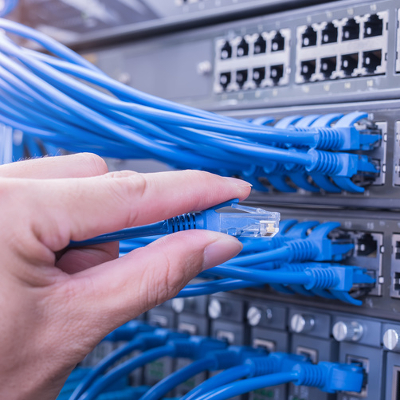 Your computer network is only as strong as its weakest link. One of the most overlooked links is your network switch, and if your IT infrastructure is becoming more dependent upon wireless technology, then you’re going to want to perhaps upgrade your network switches.
 One sometimes-frustrating aspect about computer networking comes from the always-changing nature of technology. For example, let’s say that you have your network perfectly set up with everything running smoothly, then comes along some newfangled IT trend or mission-critical technology workflow that requires you to change everything. You can’t prevent this from happening, but you can stay on top of the latest IT trends so that you’re not caught off guard.
News & Updates
The Connection, Inc. Celebrates 32 Years as a Trusted Technology Provider! Since our founding in 1992, technology and the way we operate and do business has changed a lot. Companies that have adapted and aligned themselves with ...
Understanding IT
Get the Knowledge You Need to Make IT Decisions
Technology is constantly evolving, and keeping up can feel overwhelming. Whether you want to understand cybersecurity threats, explore automation, or learn how regulations like PCI DSS impact your business, we’ve made it easy to access clear, straightforward insights on key IT topics.
Contact Us
Learn more about what The Connection can do for your business.
The Connection
51 Village CT
Hazlet, New Jersey 07730